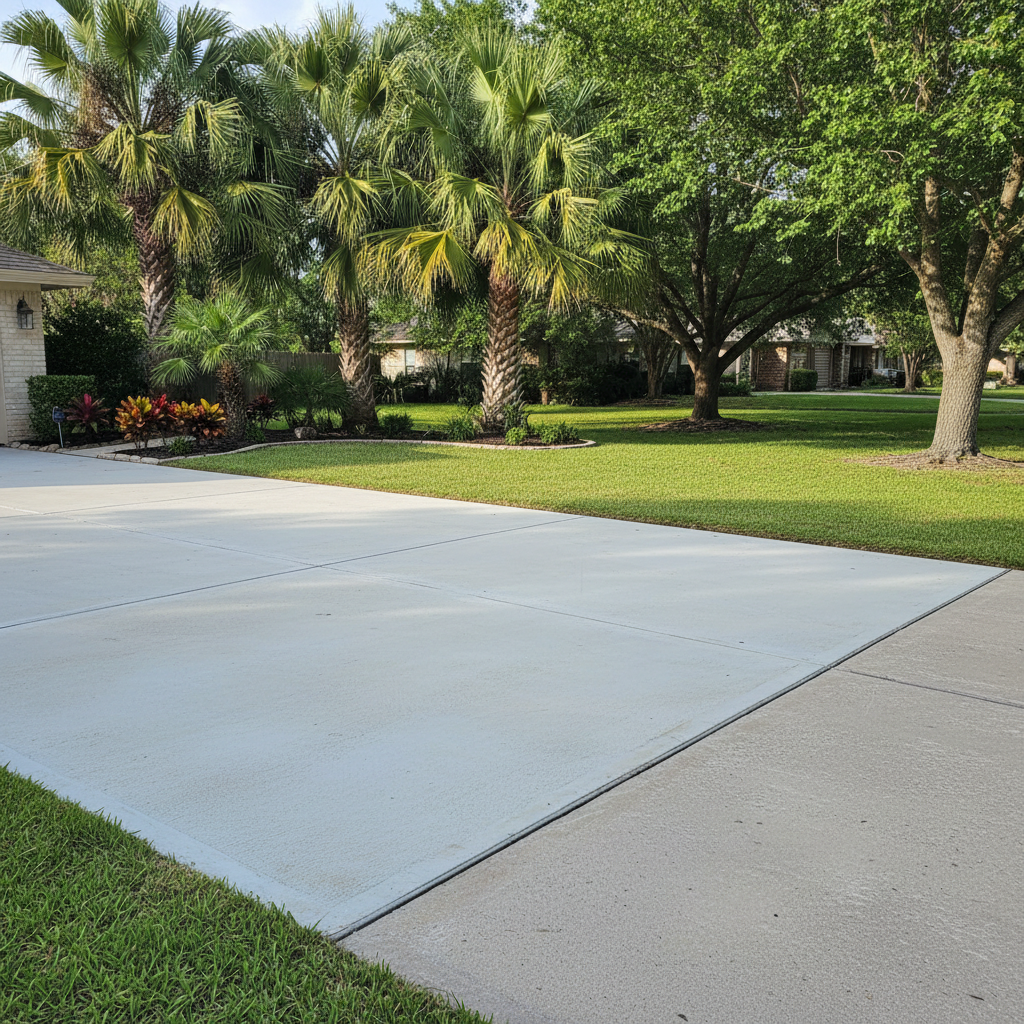
Salt air, brutal summer heat, and stubborn Corpus Christi clay do not do your concrete any favors. When you have recently had Concrete Repair work done around your house, whether it is a cracked driveway in Flour Bluff or a sunken pool deck on the Southside, you cannot just walk away and forget about it. If you leave concrete unattended down here, the environment will chew it right back up.
Here is what Corpus Christi Stained Concrete tells customers every single day: the repair process does not end when the truck leaves. Protecting your investment takes a little bit of routine care, especially when our humidity and sudden temperature swings start testing every square inch of your flatwork in Corpus Christi, TX.
How to Extend the Life of Your Concrete Repairs
Sealing is your best defense against the coastal elements. Down here near the Gulf, moisture gets into tiny hairline cracks, expands, and starts breaking things apart from the inside out. You will want to apply a breathable, high-quality penetrating sealer every couple of years. This keeps the salt air and heavy rains from soaking straight into the pores of the material.
Water management is another big piece of the puzzle. Our local clay soil swells up when it rains and shrinks down to hard rock during those dry August droughts. That constant movement puts massive stress on concrete. Make sure your gutters drain far away from your slabs, and do not let water pool up against the edges of your walkways or driveways.
What Regular Maintenance Actually Looks Like
You do not need a fancy schedule or expensive gear to keep your concrete looking solid. Keep it clean. Sweep away dirt, leaves, and organic debris regularly because rotting leaves trap moisture and stain the surface. Give the area a good rinse with a garden hose every month or so to get rid of salt residue carried in by the breeze off Corpus Christi Bay.
If you spot a small gap opening up where your driveway meets the garage, grab some flexible polyurethane caulk and seal it up. Stopping water from getting underneath the slab is half the battle. Corpus Christi Stained Concrete always reminds homeowners that staying ahead of tiny issues stops them from turning into massive headaches later on.
Warning Signs of Failing Concrete
You need to keep your eyes open for trouble before it gets out of hand. Watch out for new cracks opening up right through your previous patch work. That usually means the sub-base is shifting underneath. If you notice white, powdery buildup on the surface, known as efflorescence, you have got moisture pushing salts up through the concrete.
Uneven settling is another red flag. If one side of a sidewalk joint drops even a half-inch lower than the other, somebody is going to trip, and the problem is only going to accelerate next time we get a heavy tropical downpour in Corpus Christi.
When to Call a Professional
Some DIY patching kits work fine for cosmetic blemishes, but you need to know when to put the trowel down and call in backup. If cracks are widening faster than normal, water is pooling against your foundation walls, or large sections of your slab are sinking, it is time for a pro evaluation. Deep structural shifts require specialized mudjacking or professional slab stabilization that a tube of store-bought caulk just cannot fix. Catch it early, keep it sealed, and your concrete will hold up against whatever South Texas throws at it.