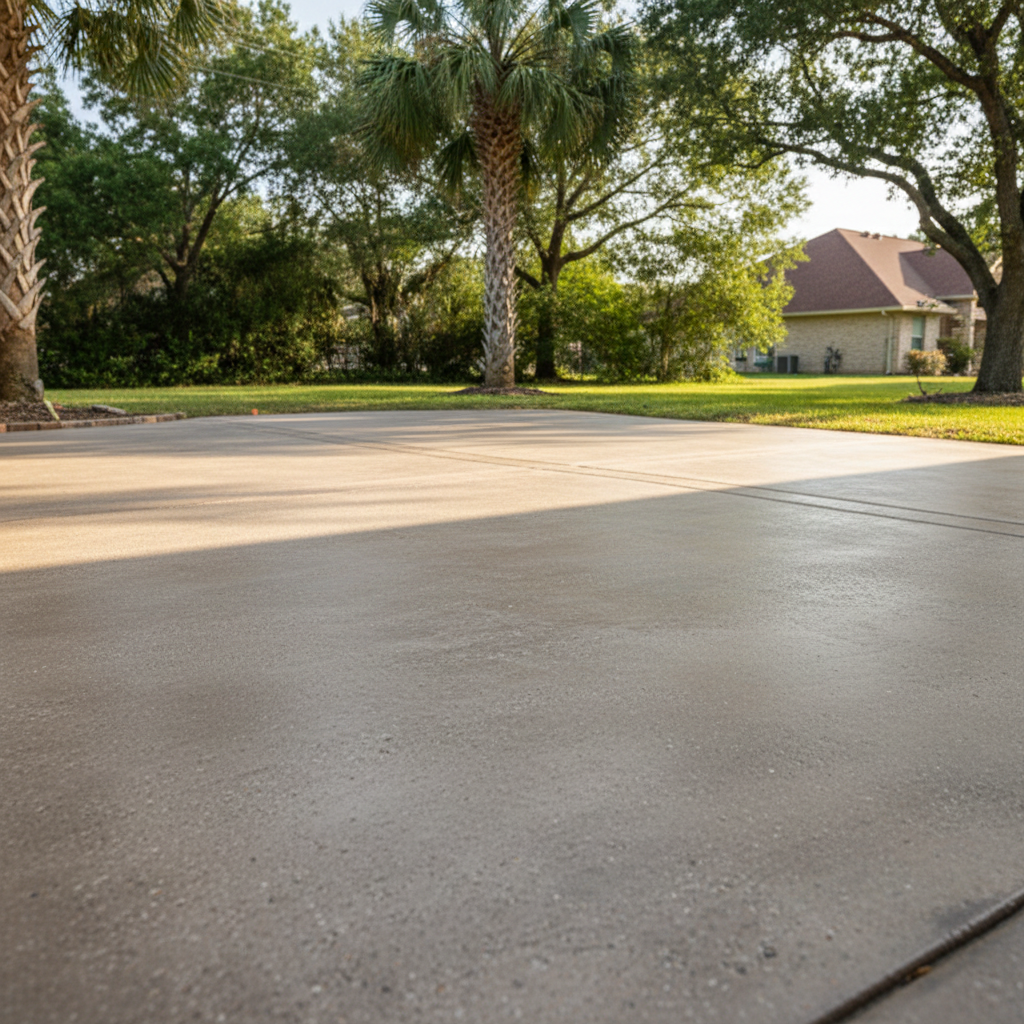
Alright, let's talk concrete patios. I get a lot of calls from folks around Corpus Christi wanting to spruce up their outdoor living space, and naturally, they've got questions. Good questions, too. So, I figured I'd lay out some of the most common ones I hear and give you the straight scoop, no fancy sales talk. This is what I tell my neighbors when they ask.
What's the real cost of a concrete patio in Corpus Christi?
This is always the first question, and it's tough to give a single number. Why? Because it depends on so much, you know? You're looking at a range, usually between $5 to $15 per square foot for a basic, broom-finish patio. Now, that's just for the concrete itself, poured and finished. If you want something fancy, like stamped concrete that mimics stone or wood, or if you're looking at stained concrete, that price jumps up. Staining can add a couple bucks a square foot, and stamping? That can easily push it to $12-$25+ per square foot, especially for complex patterns or multiple colors. The size of the patio, how much prep work the ground needs (like if we have to remove an old patio or level out a sloped yard), and how accessible the area is for our equipment all factor in. Don't forget about things like rebar or wire mesh for reinforcement, which are usually included but can vary. Basically, the more custom and complex you go, the more it'll cost. We always give a detailed quote after seeing the site, so you know exactly what you're paying for.
How long does a concrete patio last, especially with our coastal weather?
A well-installed concrete patio, done right with the proper mix and reinforcement, should easily last 20-30 years, maybe even longer. Here in Corpus Christi, we've got some unique challenges, right? The salt air, the intense sun, and those sudden downpours can be tough on anything outdoors. That's why proper curing is critical – it makes the concrete stronger and more resistant to all that. We also deal with expansive clay soils in some parts of town, which can shift and cause issues if the base isn't prepared correctly. A good contractor makes sure the sub-base is compacted properly and that the concrete has adequate thickness and reinforcement (like rebar or fiber mesh) to handle our local conditions. Regular cleaning and sealing every few years will also significantly extend its life and keep it looking good.
Will my new concrete patio crack?
Look, anyone who tells you concrete won't crack is probably trying to sell you a bridge. Concrete cracks. It's just what it does. It shrinks as it dries, and that creates stress. The goal isn't to prevent cracking entirely, but to control where those cracks happen. That's where control joints come in – those cuts or grooves you see in concrete. We put them in specific places to encourage the concrete to crack along those lines, making them less noticeable and structurally insignificant. Things like proper sub-base preparation, adequate thickness, and reinforcement (rebar or fiber mesh) help minimize the severity and frequency of random cracks. Extreme temperature swings, heavy loads, and poor drainage can also contribute to cracking. We do everything by the book to minimize it, but expecting zero cracks is just unrealistic.
What's the deal with drainage? Do I need to worry about water pooling?
Absolutely, you need to worry about drainage. It's one of the most important aspects of patio design, especially here where we can get some serious rain. A good patio needs a slight slope – usually about 1/8 to 1/4 inch per foot – to direct water away from your house's foundation and into a yard or drainage system. If water pools on your patio, it's not just annoying; it can lead to staining, moss and mildew growth, and in freezing conditions (rare, but it happens), it can cause surface damage. Even worse, if it pools against your house, you're looking at potential foundation problems. We always assess the existing grade and plan the patio's slope carefully to ensure proper drainage. Sometimes, this means adding a French drain or other solutions around the patio, especially if your yard is already pretty flat or slopes towards the house.
Can I put a concrete patio over an existing one or on dirt?
Putting a new concrete patio over an old one is usually a bad idea. If the old patio is cracked, settled, or heaving, those problems are just going to transfer right through to your new concrete. You're effectively building on an unstable foundation. We almost always recommend removing the old patio first. It's more work, sure, but it ensures a proper, stable base for your new investment. As for putting it directly on dirt, you can't just pour concrete on unprepared soil. The ground needs to be properly excavated, leveled, and compacted. We often add a layer of gravel or crushed stone as a sub-base. This provides a stable, uniform surface for the concrete, helps with drainage, and prevents settlement. Skipping these steps is asking for trouble down the road.
What kind of maintenance does a concrete patio need?
Concrete patios are pretty low maintenance, which is one of their big selling points. The main things you'll want to do are regular cleaning and sealing. For cleaning, a good sweep and a hose will handle most dirt and leaves. For tougher stains, a pressure washer (used carefully, not too close) or a stiff brush with some mild detergent usually does the trick. Avoid harsh chemicals that can damage the concrete or its sealer. The most important maintenance step is sealing. I recommend sealing your patio every 2-5 years, depending on the type of sealer and how much sun and traffic it gets. A good sealer protects against stains, moisture penetration, and UV damage, keeping your patio looking fresh and extending its life. If you've got a decorative finish like stained or stamped concrete, sealing is even more crucial to protect that aesthetic.
What's the difference between stained, stamped, and plain concrete?
Okay, let's break down the looks. Plain concrete is just that – a basic, broom-finished gray slab. It's functional, durable, and the most cost-effective option. It's perfect if you want something simple or plan to cover it with outdoor rugs and furniture. Then you've got stained concrete, which is where we apply a chemical stain that reacts with the concrete's minerals to create translucent, rich, and varied colors. It's not a paint; it penetrates the surface, so it won't chip or peel. You get these beautiful, earthy tones – browns, tans, grays, even blues and greens – with a unique, mottled appearance. It's a fantastic way to add character without adding texture. Finally, there's stamped concrete. This is where we pour the concrete, and while it's still wet, we press large rubber mats (stamps) into the surface to create patterns that mimic natural stone, brick, wood, or even tile. We can also add color hardeners and release agents to enhance the look, making it incredibly realistic. It's a great way to get the high-end look of natural materials at a fraction of the cost and with concrete's durability. Here at Corpus Christi Stained Concrete, we specialize in making your patio more than just a slab.
Hopefully, that clears up some of your questions. If you're thinking about a new patio or just want to chat about your options, don't hesitate to give us a call. We're always happy to talk concrete.