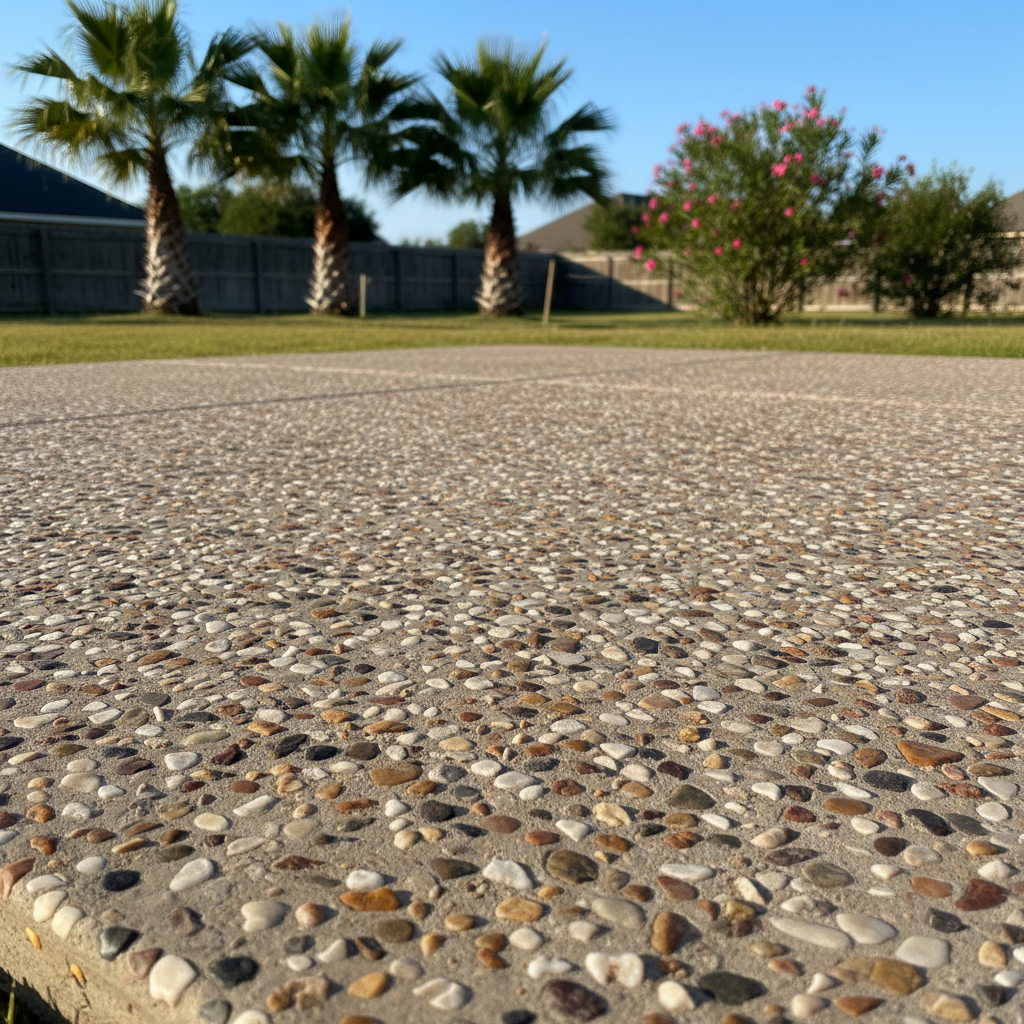
What's the real deal with concrete patios in our Corpus Christi climate? Will they crack?
Look, you live in Corpus Christi. We get hot, humid summers, the occasional freeze, and then it's right back to hot again. That kind of temperature swing, especially with our clay soils that expand and contract, really puts a lot of stress on any outdoor surface. Concrete *will* crack, period. Anyone who tells you otherwise is probably trying to sell you a bridge, too. Our goal isn't to stop all cracks, it's to control them. We do that with proper sub-base preparation, a good concrete mix, and, most importantly, well-placed control joints. These joints are cut right into the slab, giving the concrete a designated spot to crack – usually in a straight line that's much less noticeable than some random, jagged mess. We also toss in rebar or wire mesh for extra tensile strength. If you're seeing a lot of random, wide cracks, that usually points to a problem with the original installation, not just the concrete itself, you know?
How long does a concrete patio actually last around here?
A well-installed concrete patio in Corpus Christi, if you take care of it, should easily stick around for 20-30 years. Sometimes even longer! I've personally seen some that are 40 years old and still doing their job, though maybe they're not quite as pretty as they once were. The lifespan really boils down to a few things: the quality of the initial pour, how well the base was prepped, and whether you're actually maintaining it. Things like dragging heavy furniture across it constantly, or skipping sealing it every few years, can definitely shorten its life. But generally, it's a super durable choice for our area.
What's the difference between stamped, stained, and plain concrete?
Okay, let's clear this up because it's where a lot of folks get a bit mixed up. Plain concrete is just what it sounds like – a simple gray slab. It's functional, easy on the wallet, and you can always spruce it up later with outdoor rugs and furniture. Stamped concrete is different; we pour the concrete and, while it's still wet, we press big rubber mats with patterns into it to make it look like stone, brick, wood, or other textures. Then we often add color to really make that look pop. It's a fantastic way to get a high-end appearance without the hefty price tag of natural stone. Stained concrete, which is our specialty here at Corpus Christi Stained Concrete, is another animal entirely. We apply a chemical stain that reacts with the free lime in the concrete, creating these translucent, variegated colors that become a permanent part of the slab. It's not a coating, mind you; it actually penetrates the surface. You can stain new concrete or even existing concrete if it's in good shape. Each option has its own vibe and feel, so it really just depends on the look you're after and, of course, your budget.
Do I need a permit for a concrete patio in Corpus Christi?
Most of the time, yeah, you'll need a permit for a new concrete patio in Corpus Christi. Especially if it's attached to your house or if it's a decent size. The city just wants to make sure it's built to code, that drainage is handled correctly, and that it's not creeping onto easements or property lines. You absolutely do not want to skip this step. Trust me, it's a huge headache if you get caught later, and it can cause real problems when you try to sell your home. A good contractor will either handle the permitting process for you or at least walk you through it. It's just part of doing things the right way.
How do I maintain my concrete patio once it's installed?
Maintenance isn't rocket science, but it is important. First off, keep it clean. Sweep off leaves and debris regularly. For everyday cleaning, a hose and a stiff brush with some mild detergent usually do the trick. For tougher stains, you might need a pressure washer, but be careful not to crank it up too high, especially on decorative concrete, since you could damage the finish. The most crucial thing, though? Sealing. I recommend sealing your concrete patio every 2-3 years, especially here in Corpus Christi where we get that intense sun and those occasional heavy rains. Sealing protects against moisture getting in, UV damage, and it just makes it easier to clean. Think of it like sunscreen for your patio. If you've got a decorative finish, like stamped or stained concrete, the sealer also helps keep the color and pattern looking good.
Can you pour a new patio over my old, cracked concrete?
This is a super common question, and the short answer is usually no, not directly. If your old concrete is badly cracked, heaving, or has serious drainage issues, just pouring new concrete over it is often a recipe for disaster. Those existing problems will almost certainly show through to your new slab, meaning you'll see cracks in the new concrete mirroring the old ones. Sometimes, if the old slab is really stable, drains well, and only has minor surface imperfections, we can do an overlay or resurfacing. But for a truly durable, long-lasting new patio, we almost always recommend ripping out the old concrete and starting fresh with proper sub-base preparation. It's more work upfront, but it saves you headaches and money in the long run, believe me.
What's the typical timeline for a concrete patio project?
The timeline can really jump around depending on the size and complexity of your patio, the weather, and the contractor's schedule. For a typical residential patio, say 200-400 square feet, you're usually looking at a few days for the actual work. Day one might be tearing out the old patio, digging, and prepping the base. Day two could be setting forms and pouring the concrete. Then, if it's a decorative finish like stamping or staining, that might happen on day two or three. After the pour, the concrete needs time to cure. You can usually walk on it after 24-48 hours, but you'll want to keep heavy furniture and vehicles off it for at least 7 days – and ideally 28 days for it to hit its full strength. So, from start to finish, including that cure time, plan for about 1-2 weeks before it's completely ready for heavy use. Of course, unexpected rain delays can push things back, which is just part of working outdoors in Corpus Christi.